


Interview with Daniele Galliano: removing labels to find your own voice
"The problem with not listening to yourself is that you often end up spreading the problem. In rumination and overthinking, which are very common today, you remain focused only on the problem. When we begin to address it, there may come a time when we shift our energy toward the solution as well."

Photographic material provided by Daniele Galliano
There are people who cannot be easily described with a single definition.
Daniele is one of them. It's not the story of someone who has it all figured out, but of someone trying to listen to himself more honestly, to shape himself without losing himself, to keep his roots with him as he tries to forge a new direction. A quest encompassing music, books, psychology, spirituality, returns, departures, and questions.
But reducing all this to a list of experiences would be unfaithful to his story. Because, speaking with Daniele, what emerges is not a desire to accumulate titles, but a deeper quest: to better understand himself, humanity, change, and the possibility of integrating different worlds without remaining stuck within a single label.
“Mine is a personal revolution,” he tells me. “It's about shedding the labels we attach to ourselves and hold onto jealously throughout our lives. I'm not just a flutist, a musician. I want to be something else too.”
And that's exactly where we started.
Table of Contents
1 - THE SYNONYMOUS THREAD, BEYOND THE LABELS
Daniele, your personal and professional history intersects music, psychology, coaching, living abroad, and many other interests. If you had to describe yourself not through a definition or a title, but through research, what would you say is the thread that ties it all together?
<<My interest in personal evolution. Ever since I was little, up until today, I have always had the desire to discover myself, to understand what my potential is and what direction I am following. I am interested in human existence, in this possibility we have to unite a spiritual part and a logical part, an intelligence that allows us to notice particulars and details that make lives extraordinary. My underlying interest in the human being and the human mind is what drives me every day to add another piece, to grow and to better understand others as well.
The older you get, the more you notice the differences between you and the people around you: individual differences, cultural differences, backgrounds, upbringing, and past experiences. These are all factors that make each life unique.>>
2-THE EFFORT, AND THE FREEDOM, OF BEING MANY THINGS
You're young, but you've already explored a wide variety of backgrounds and disciplines. How natural was it for you to pursue so many interests, and how difficult was it to avoid feeling too scattered?
<<It was very difficult.

Even today, I struggle to channel all this energy into a single source. I remember that as a child, around 12 years old, I started entering music competitions. I had a direct impact, very early on, on competition and performance. From 12 to 25, I saw myself as someone who was meant to be a musician. I channeled all my energy into music, neglecting other interests. On LinkedIn, I wrote something completely anti-self-branding: I wrote that I had no labels. But for me, it's truly a personal revolution. We tend to say 'I am a musician,' 'I am a teacher,' when in reality, more than being a profession, we are pursuing a profession. We then try to channel what we are into our work. For me, removing the label meant saying: I am not just a flutist, a musician. I want to be something else too. And perhaps, in this diversity, make a career out of it. That's what I'm working on: trying to incorporate different knowledge and studies into a single professional figure.>>
3-WHEN MUSIC TEACHES YOU TO LISTEN TO YOURSELF
You studied flute for many years, pursuing a vision of perfection, of flawless, error-free artistic expression. What has music taught you?
<<Music taught me to listen to myself, through a paradoxical effect.
I realized I started really listening to myself very late, because until recently I tended to avoid myself. I listened to others, to their judgment, to the outcome, to the result, but I put aside my inner self.
Music made me realize this. It taught me to awaken parts of myself that were dormant and listen to their voices, to what they were trying to tell me.>>
4- LAUGH AT YOUR OWN IMPERFECTION
In this quest for perfection, what is your relationship today with error, performance, and limitations?
<<The relationship with limits and with mistakes is also connected to perfection.

This almost obsessive pursuit of perfection has forced me to rethink my approach. Musicians often err on the side of arrogance. I've tried to go against the grain and understand that we need to take ourselves much less seriously. Artists convey a message, but they must do so genuinely. Instead, we often build superstructures: we need to be impeccable, brilliant, stand out. This also stems from competition. There are so many musicians, the demand has increased, and there are so many people with the same background. Imagine an orchestra offering only one spot and finding itself faced with hundreds of applicants. It's natural to think that the solution is to be the best of the lot. But I've noticed that often, those who win an audition aren't necessarily the best in terms of quality. I believe that making a difference doesn't just mean being impeccable and not making mistakes, but also including mistakes in your performance. I see a parallel between music and life.
Even flaws are part of our history and should be worn like a flag, without fear, without demonizing our own imperfections. I would like to invite musicians in particular, but people in general, not to take themselves too seriously. To laugh at their own imperfections, because imperfection is part of the human condition. If we were perfect, we wouldn't be human. We would be something else.>>
5-THE ROOTS THAT DON'T BREAK
Palermo is your hometown, and you returned to it a few months ago. How important are your roots in how you view the world, relationships, and what you're building today?
<<For me, roots are extremely important. They are part of my story.
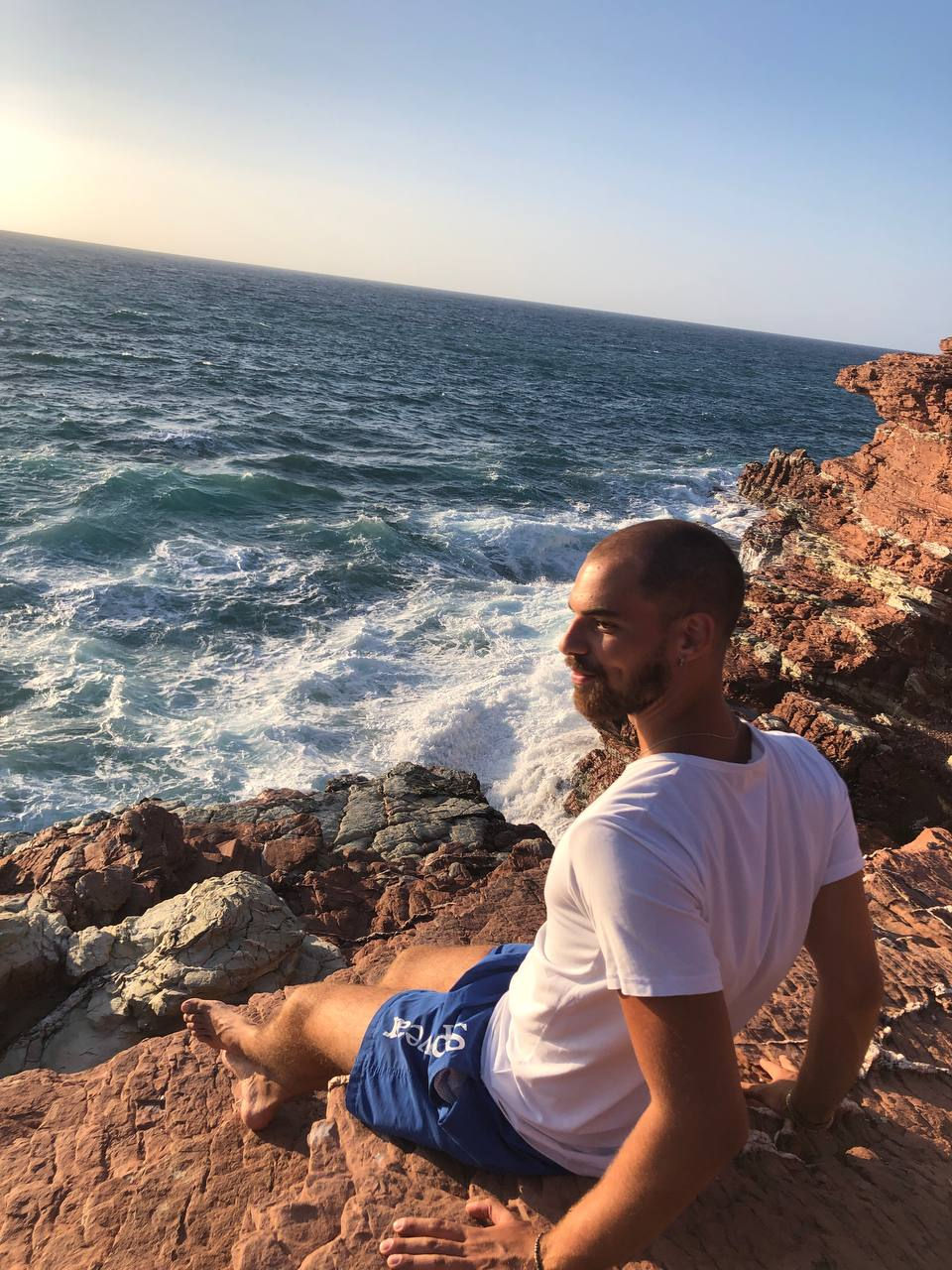
I've often heard of people who have severed their roots. I didn't succeed. I realized that my roots remained firmly in place: they just extended further. At a certain point, I felt them pulling me back home, because I'm deeply attached to my land, my traditions, my culture. I've always carried them with me, and now I've decided to heed their call. I want to see if I can thrive right here, in my homeland. However, I remain of the opinion that in the future I will need to remain flexible. If I recognize that leaving Sicily, Italy, or Europe will be necessary, I will follow my instincts, without getting lost in my comfort zone. But I will still carry these roots with me, because they are my legacy and have shaped me.>>
In one of the thoughts you shared with me, you wrote that Palermo taught you to distinguish those who have nothing to lose from those who have a personal treasure to defend, even with silence. What did you mean?
<<Being Italian, and particularly Sicilian, abroad means often hearing certain stereotypes linked to Italy, Sicily, and the mafia. However, I believe that the history we have experienced in Sicily also contains a very deep message of community, solidarity and legality. I did not directly experience the hardest years, but I realize that some remnants of that history have remained. This reflection led me to question the difference between those who have something to defend and those who, instead, seem to have nothing to lose. I am not saying this to justify anything, but to observe the deep distress that can lead some people to extreme actions.
When I went abroad, I also brought this Sicilian perspective with me. It helped me to observe different realities with greater awareness and to get an idea of the future I wanted to build.>>
6-GERMANY AND THE CHOICE TO RETURN
You lived in Germany for almost four years. What did this experience teach you, not just professionally, but personally?
<<After completing my bachelor’s degree at the Conservatory of Palermo, I decided to continue my studies. In Italy, at that time, I did not have many opportunities for further specialization.

I wanted to continue studying and chose to take an opportunity abroad. I first tried in Belgium, in Brussels, then at a university in Strasbourg, and after several attempts in Germany, I arrived in Essen, where I was accepted into a very renowned university of the arts, Folkwang UDK. To get in, you had to audition, as places were limited. Enrolling and being selected was already an adventure. I saw Germany as a great opportunity for growth, development, and affirmation. In truth, even then I felt an internal crisis regarding the future I envisioned as an orchestral musician. I went to Germany also to get to know myself better and to understand whether an experience abroad would rekindle the passion I had begun to cultivate as a child. Then I realized that that passion had faded, giving way to other interests. Germany was crucial in this regard. I went there to study, then I had the opportunity to enter the professional world and understand what it meant to work as a music teacher in German private schools.
When I was starting to plan my career and future in Germany, I asked myself a crucial question: did I really want to build something there? I realized it wasn't the plan I wanted to pursue. So I said to myself: let's go back home, after almost four years -after work, university studies, a romantic relationship, and many friendships forged there - and let's go back to Sicily to reinvent ourselves. It was another step outside of my comfort zone.
There I could have continued to work and take on assignments, because the opportunities were there and were more numerous than in Italy. But I decided not to take the easy way, the quickest way like Google Maps. I chose the most rewarding way.>>
7-LITERATURE, PSYCHOLOGY AND THE UNIQUENESS OF THE HUMAN BEING
In your most recent training, in addition to coaching, you also began studying psychology. In the thoughts you shared with me, you wrote that you love psychology because human potential can be expressed or repressed in many ways. Where does this interest in humanity come from?
<<I believe it began very early. When I was in middle school, I read The Baron in the Trees by Italo Calvino. I immediately grasped Calvino’s idea, which I later found again in Six Memos for the Next Millennium: lightness, but not understood as superficiality. From there, I became passionate about literature, which became my passe-partout to different lives, with different backgrounds, in different historical periods.
I began to notice how culture, the way we grow up, and our human potential make each life unique. This is one of the themes closest to my heart: the uniqueness of each individual.
Since I was a child, I've been interested in extraordinary characters. Characters who climbed trees and never came down, who followed their own ideas, not those dictated by family or society. I think there was a very long incubation period. Then came an awakening. I brought to awareness my interest in human existence, not just seen from the outside, but as a possibility of delving into the deepest interiorities, into those abysses that often frighten everyone. The opportunity to study psychology was the culmination of this interest. Now I can delve into the heart of these dynamics and study them from a scientific perspective as well. It's wonderful to study human beings from a literary and spiritual perspective, but knowing that there's also underlying scientific research provides further reinforcement. I've tried to combine literature, spirituality, and science to gain a broader understanding of human existence.>>
8-SPIRITUALITY: GOING BEYOND APPEARANCES
In our exchanges, references to Eastern practices and traditions often emerge: yoga, the teachings of Lama Michel, mindfulness, and inner exploration. What attracts you to these worlds?
<<Going beyond appearances.
I've noticed a common denominator: we focus too much on our external lives, on others, on work, on our actions, but often we don't truly notice our thoughts. Or we do notice them, but we lack the ability to delve deeper and understand their origins.
In spirituality, but also in psychology, I see this intention to go beyond appearances, beyond the evidence we perceive through the senses, to search for meaning. The title of a book by Carlo Rovelli comes to mind, "Reality is not as it appears to us." We think of reality as objective, but in fact, reality is also experienced through our uniqueness, our subjectivity. This, for me, is the common denominator between these different islands.>>
9- LOOK FOR GOOD QUESTIONS, NOT JUST ANSWERS
You read a lot, listen to podcasts, and seek out ongoing insights. When choosing a book or content to listen to, what do you look for?
<<I seek good questions to ask myself, rather than answers.

Or those little insights that turn your day around and open you to new reflections. Every day I look for a podcast that allows me to question myself through universal themes. Lately, I've been focusing more on nonfiction books, partly because I'm getting more into science. However, meditation and spirituality approached from a scientific perspective remain central to my research. Essentially, I'm looking for that spark that can light a fuse, an evolutionary process. I try to nurture personal growth through small inputs.>>
1 0-THE THREE BOOKS THAT DANIELE RECOMMENDS
If you had to recommend three books to anyone reading this interview, which would you choose and why?
<<The first is The Little Prince. It is my absolute favorite book. I recommend reading it and rereading it several times. Then The Art of Loving by Erich Fromm. Love is a theme that concerns us all, but this book is not only about romantic love. It speaks about love in its different nuances: relational, familial, friendship-based and spiritual. From the perspective of spirituality, I would recommend Gianluca Gotto’s books, because they introduce these themes in a simple way. If I had to choose one, I would say Deep as the Sea, Light as the Sky, although for those who are not passionate about Eastern philosophy it might be more complex. Alternatively, Something Wonderful Always Happens. It is a novel that has already been talked about a great deal, but I believe it will stand the test of time. It is like a rising star: we are already enjoying its light today, but that light will probably remain for a long time. >>
11-THINKING OF YOUNG PEOPLE: REDUCING BACKGROUND NOISE
If you had to leave a thought for a young, curious person, full of interests but unsure of which direction to take, what would you say?
<<I would tell them not to be afraid to reduce the background noise to a minimum. Turn off the phone for a while, the television, the sources of information. Find a quiet place: it can be the sea, nature, or even the peace of one’s own room. Seek a state of silence and do not be afraid to let thoughts emerge, even the deepest or most unpleasant ones, perhaps writing them down without worrying about logical or grammatical sense, letting the unconscious dictate what it has to say. The invitation I make is to find the courage to observe thoughts, feelings and sensations without judgment, with an analytical spirit, and to try to understand what message they contain, especially when they are repetitive or recurring. And then, not to be afraid to ask for help. It can be a coach, a Yoga teacher, a therapist, a psychotherapist, a psychiatrist when needed. The important thing is to look for qualified, authoritative figures, with a serious background of knowledge.
The message I would like to leave is this: go beyond your demons and fears, and try to find the message hidden within them.
The problem with not listening to yourself is that you often end up spreading the problem. In rumination and overthinking, which are very common today, you remain focused only on the problem. When we begin to address it, there may come a time when we shift our energy toward the solution as well. For me, it's important to work on two fronts: the problem and the solution. Not just the problem. Not just the solution. Finding a balance.>>
Sometimes, to find your voice, you first need to have the courage to shed some labels. And perhaps Daniele's portrait speaks precisely to this: the possibility of changing shape without betraying who we were, bringing with us roots, questions, imperfections, and a desire for knowledge.
BIOGRAPHY of DANIELE GALLIANO
Daniele Galliano, born in 1999, is originally from Palermo. He studied flute for many years and earned a bachelor's degree from the Palermo Conservatory, later continuing his musical education abroad.
He lived in Germany for almost four years, where he studied at the FOLKWANG Universität der Künste (UDK) in Essen and also had the opportunity to approach the world of work as a music teacher in private German schools.
Alongside his musical training, Daniele has developed a strong interest in personal development, psychology, coaching, literature, spirituality, and mindfulness practices. He trained in coaching and began studying psychology, aiming to further deepen his understanding of the human being, his potential, and the processes of change.
Today he continues his personal and professional research, aiming to integrate music, listening, inner growth, and knowledge, seeking to build a figure capable of combining diverse interests and skills, beyond rigid definitions and professional labels.
Disclaimer
The reflections contained in this interview represent the interviewee's personal experiences and opinions. They do not constitute psychological, psychotherapeutic, medical, health, or other professional advice. In cases of personal, emotional, or psychological distress, it is always advisable to consult qualified professionals, licensed under applicable law.


